

“VFD in Panama — price vs. true cost” series · Part 4 of 4
What this installment exposes. The most important part is still missing: over 80% of the true cost of a VFD arrives after the order is signed. Obsolescence, spare parts, support, monitoring, retrofit. Mature manufacturers publish lifecycle phases and written spare parts commitments; the new price-driven players do not. That difference decides whether your fleet will be an asset over 15 years or an annual consumable.
What you get out of it. You will leave with a post-purchase checklist of 6 questions and a comparative table of TCO over 12 years for your purchasing committee.
The quote is the small part of the decision
A well-chosen variable frequency drive runs for 12-20 years. Over that horizon, the purchase price is a minor fraction of the TCO —in the example at the end, less than 3%—. The rest is split between energy (by far the largest item), maintenance, spare parts, downtime and eventual replacement. This is where low-cost VFDs have no answer — because the manufacturer was not built to sustain a product over the long term.
1. Published lifecycle phases
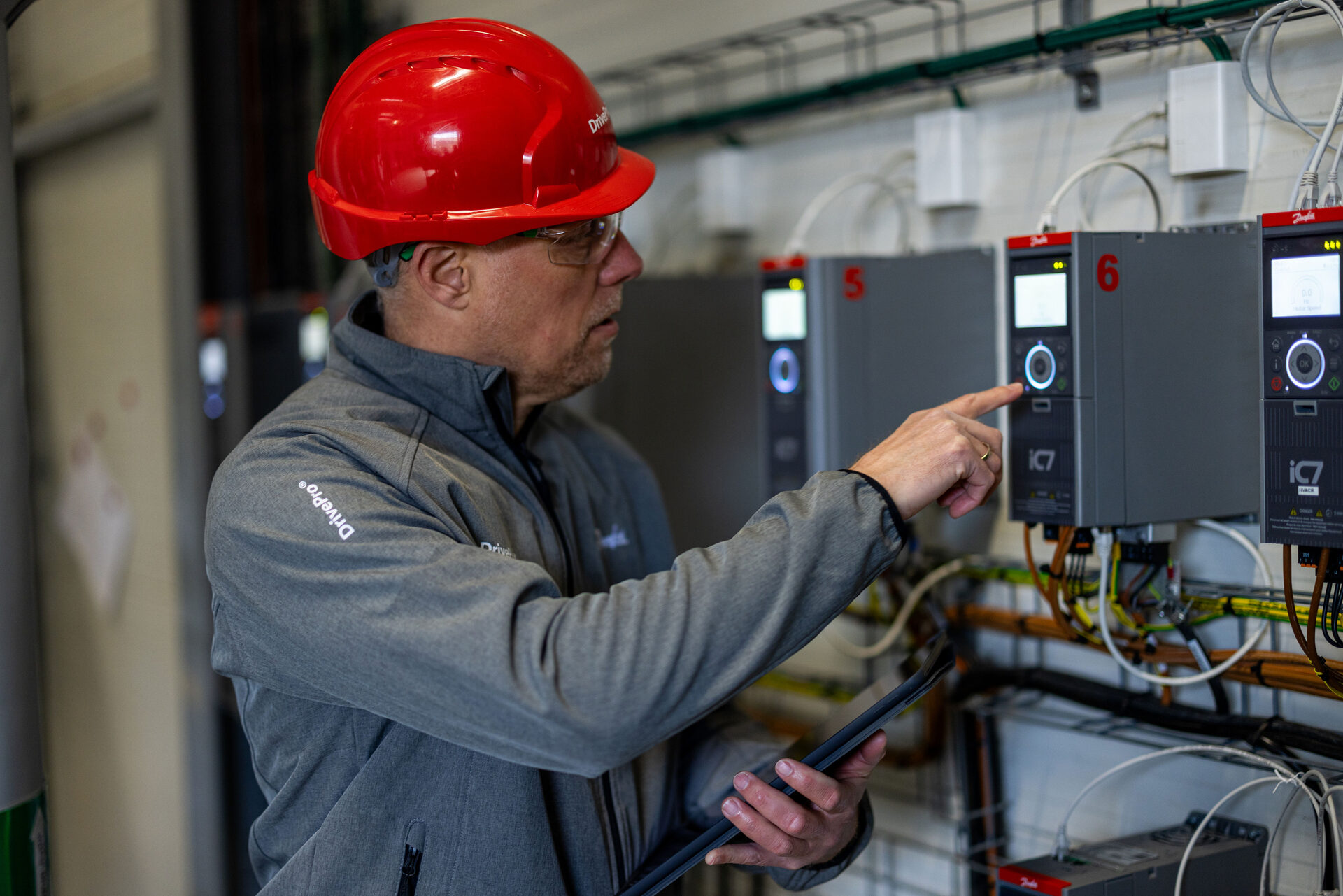
Serious manufacturers declare each model in a lifecycle phase published in advance. Danfoss, for example, uses four phases:
| Phase | What it means | What it implies for you |
|---|---|---|
| New | Just launched, latest generation. | Full catalog and support. |
| Active | On sale for new installations and expansions. | Catalog, support and firmware updates. |
| Limited | No longer sold; the final order (Last Time Buy) was announced. | Spare parts and service exist: plan the retrofit. |
| Inactive | Discontinued, no official spare parts. | Retrofit is mandatory. |
Between the final order and the end of service there is a written margin —at Danfoss, spare parts guaranteed for at least 5 years from the Limited phase and technical assistance for up to 10 years—: real time to plan. Low-cost VFDs disappear from the catalog with no warning. The customer finds out when he asks for a board and is told “that model does not exist any more, but we have the new one”.
2. Real spare parts availability
“We have spare parts” is measured with three questions:
- Which boards and modules are in local stock in Panama today? Control boards, power modules for the common ratings, fans, capacitors, keypads — not “we can bring them in 3 weeks”.
- How many generations does that stock cover? A typical VFD goes through 8-10 generations of control board in 20 years. Limited stock covers only the last 2-3.
- Is there a written contractual spare parts commitment —for how many years— after the final order?
A real case at a Panamanian industrial plant (2025): a fleet of 40 low-cost VFDs was left without spare parts when the manufacturer closed its regional operations. 12 units in production with no path to repair. Cost of the forced migration to a platform with local support: US$95,000 that were not budgeted (VFDs + retrofit engineering + downtime hours).
3. On-site spare parts strategy
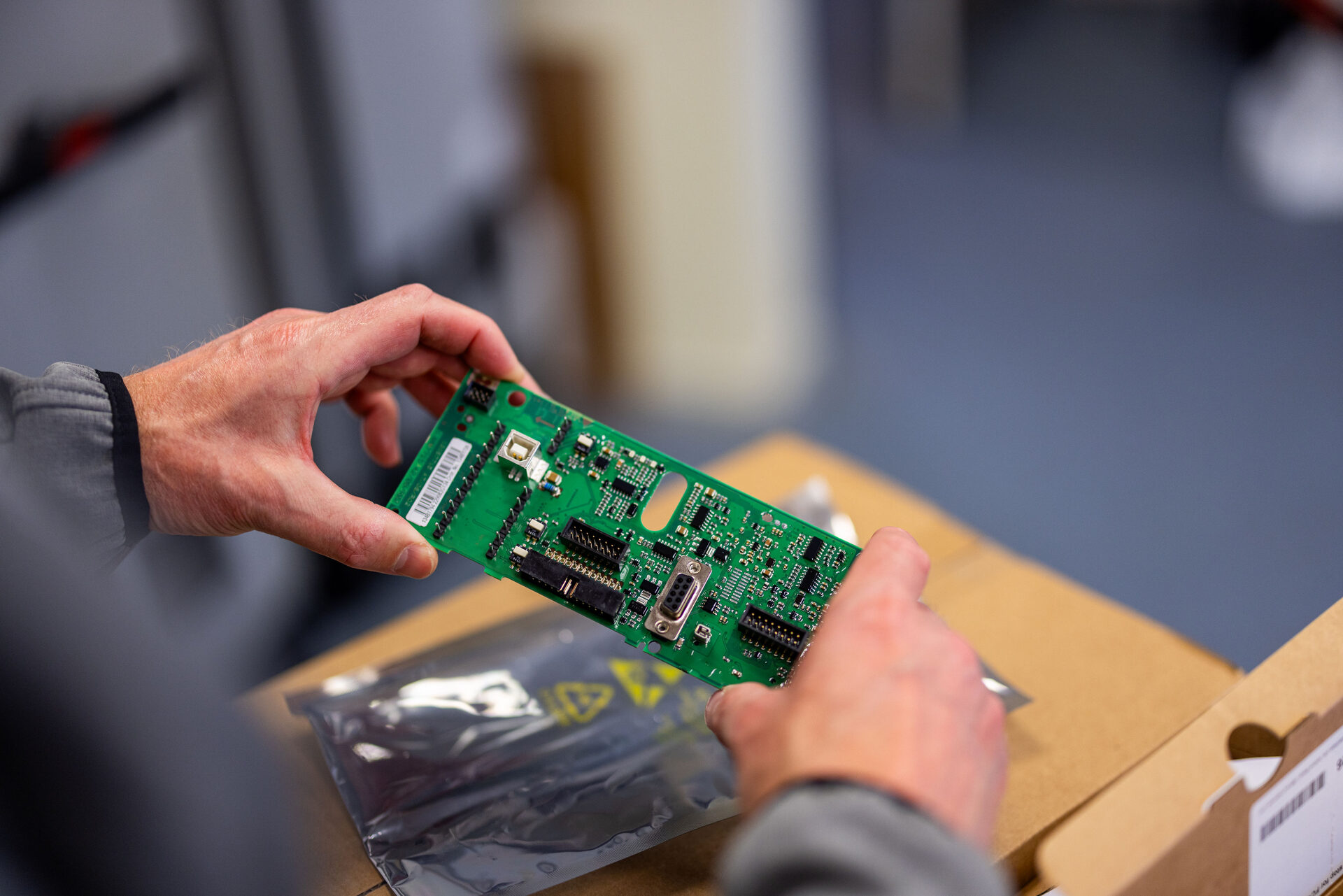
With a modular VFD you can keep only the 3 components that fail most in your own stock, instead of a whole backup VFD:
- Control board (2-3 per range): 15 min to replace.
- Fan module: 20 min.
- DC bus capacitor kit: scheduled replacement at 60,000 h.
Investment of roughly 8-12% of the fleet value. Average downtime: from 8-48 h (importing) to 2 h (on site). Low-cost units are sold “as the complete unit only” — their components are not designed to be serviced in the field. Genuine Danfoss spare parts can be looked up in our spare parts store.
4. Support SLA — the number you dial at 2 AM
| Level | Real response time |
|---|---|
| Web / chatbot | Immediate but generic |
| Regional call center | 30 min – 4 h |
| Local engineer | 1-4 h on site |
| 24/7 with a contractual SLA | 2-8 h on site, with penalties |
Low-cost suppliers rarely go beyond level 1-2. A concrete question: “If the VFD fails on a Sunday at 11 PM, who answers, how long does it take, and what is the penalty?” The answer defines the real value of the support.

5. Remote monitoring and predictive maintenance
A modern VFD is already a sensor: it measures current, voltage, temperature, events and cycles. A serious remote monitoring system integrates continuous telemetry, remaining-life models (capacitor, fan), anomaly detection against a baseline, email/SMS alerts, monthly reports and authenticated web access.
A case documented at Beiton (food industry, 2024–2025): 25 VFDs monitored with DrivePulse over 24 months → 70% fewer unplanned stoppages · 30% lower maintenance cost · ROI in 14 months. The data comes from the telemetry platform and from the customer’s CMMS system.
Low-cost units rarely offer secure remote monitoring, and when they do it comes without cybersecurity certifications. At Beiton we implement this layer with DrivePulse — our fleet monitoring platform for Danfoss drives, with telemetry, proactive alerts, condition reports and authenticated web access.
6. Planned preventive maintenance
A typical serious program:
- Light annual service (1-2 h): cleaning, torque, inspection, log.
- Between 3 and 6 years (3-4 h): preventive replacement of fan and filter, DC bus verification.
- Between 6 and 17 years, depending on environment and load (6-8 h): replacement of capacitors and power components, firmware update.
- A traceable condition report per unit, with estimated remaining life.
It has to be carried out by certified personnel with official tools. “Any technician can do it” = “nobody is responsible”.
7. Training and retrofit — the customer has to know how to operate
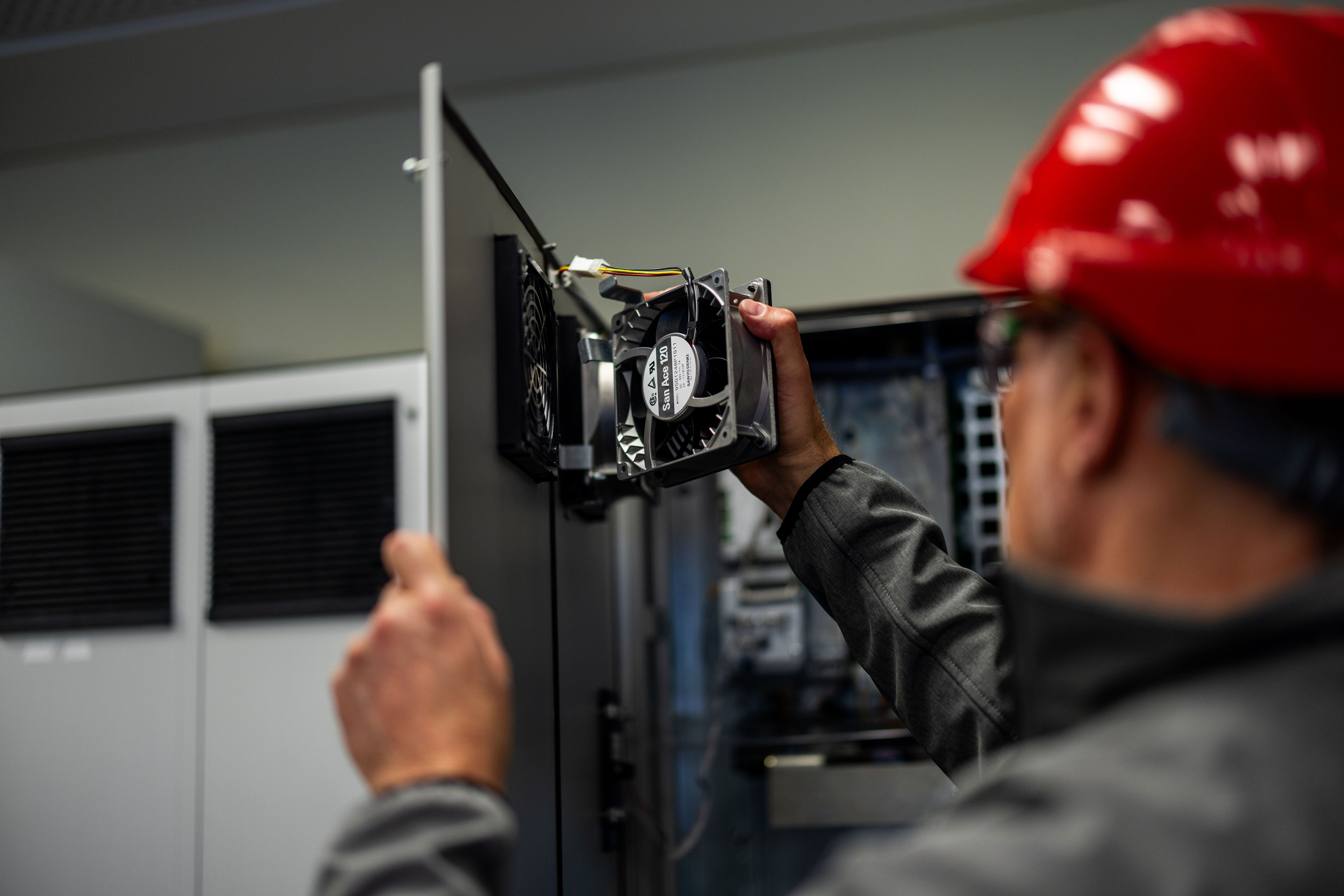
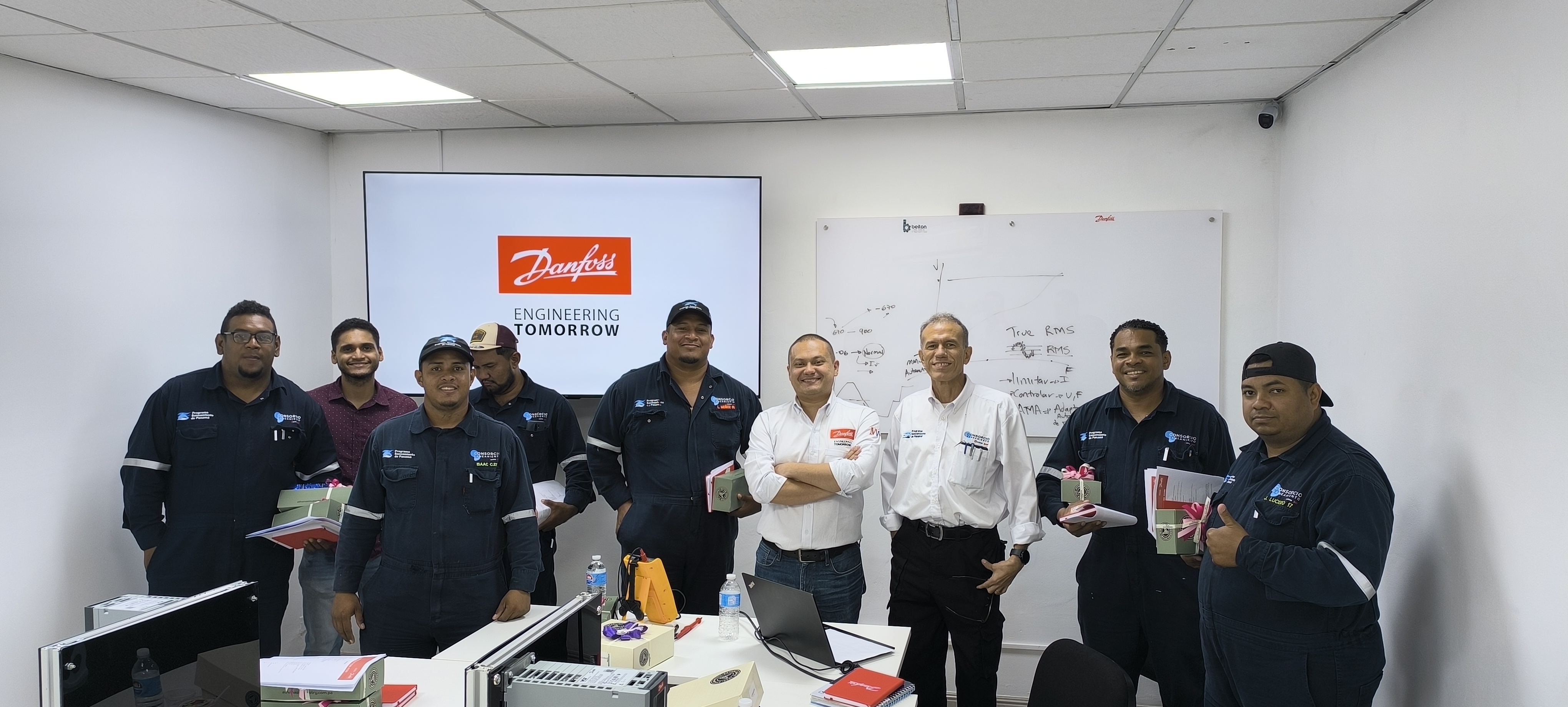
Certified training, manuals in Spanish, free official software and a technical community are what turn the customer’s own personnel into the first line. In our experience, a well-trained customer resolves a good share of faults internally — with no visit to bill.
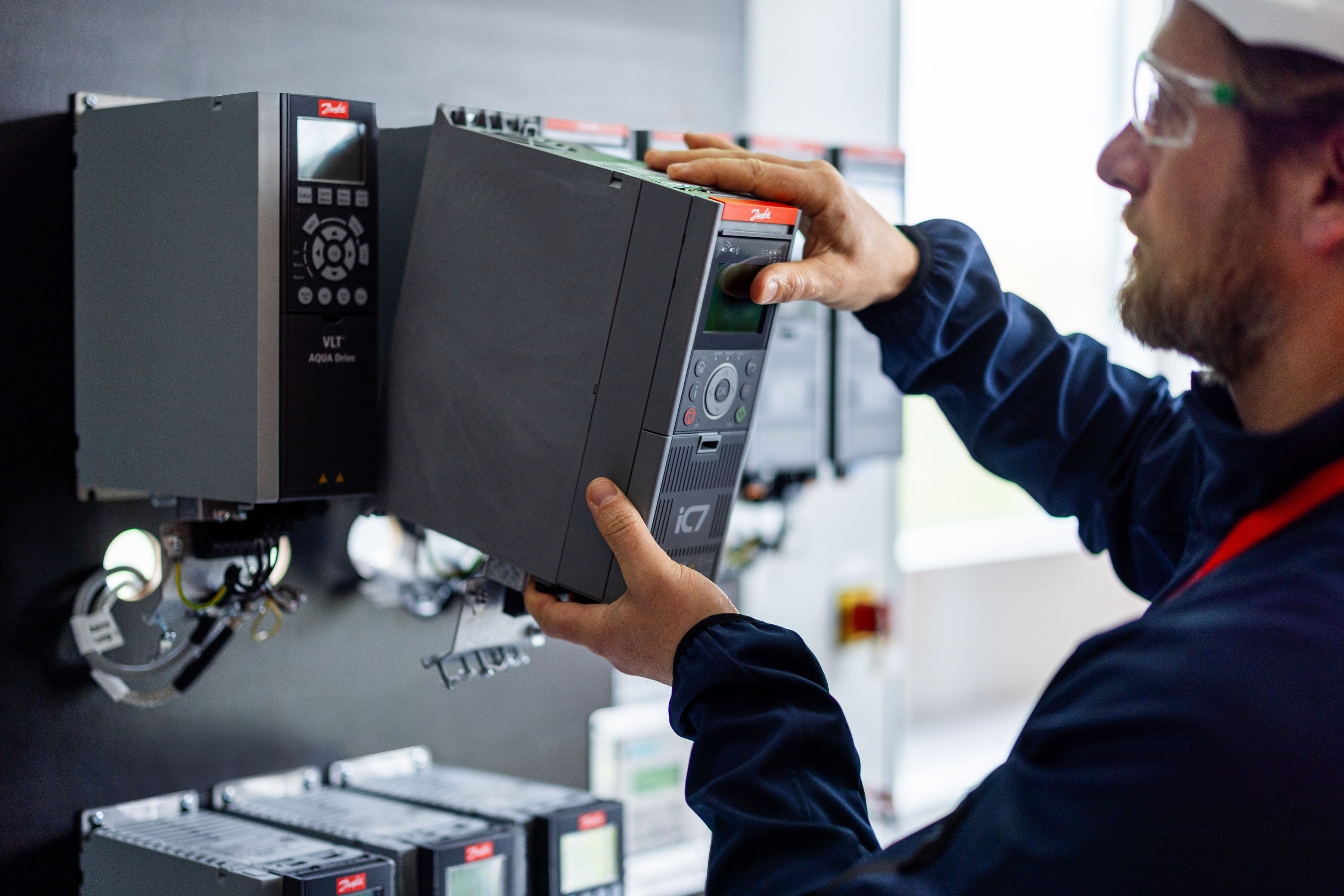
Retrofit kits that are mechanical (same footprint, same drill holes), parameter templates that migrate the configuration from the old model, communications compatibility with the existing PLC. Downtime: 4-8 h vs 2-3 days with a retrofit from scratch. Low-cost units force a complete re-engineering — hidden cost: 2-4× the new VFD.
8. DrivePro Services — a single party responsible for the lifecycle
Danfoss consolidates all of the above into DrivePro Services: Exchange/Retrofit · Preventive Maintenance · Remote Monitoring · Spare Parts · Site Assessment · Extended Warranty (up to 6 years depending on the model).
The value is not in each service in isolation — it is in having a single party responsible for the full lifecycle, with historical data, trained personnel and a contractual commitment. Low-cost units do not plug into equivalent programs because the manufacturer does not have the regional infrastructure.
The real ROI over 12 years
A fleet of 20 VFDs, 45 kW on average:
| Item (12 years · 20 VFDs × 45 kW · 8,000 h/year) | Low-cost | Industrial + DrivePro |
|---|---|---|
| Initial investment (20 VFDs) | US$180,000 | US$260,000 |
| Total energy over 12 years (typical 60% load) | US$9,330,000 | US$8,585,000 |
| Accumulated downtime hours | ~400 h | ~80 h |
| Cost of downtime (US$1,500/h × hours) | US$600,000 | US$120,000 |
| Replacements from forced obsolescence | US$95,000 | US$0 |
| Service and PM | US$25,000 reactive | US$55,000 planned |
| TCO over 12 years | US$10,230,000 | US$9,020,000 |
The US$80,000 of extra spend on the industrial purchase turn into US$1,210,000 of savings over 12 years — a reduction of about 12% in total cost of ownership. Energy is more than 90% of the TCO: that is why a few points of efficiency weigh more than any difference in purchase price. The exact values vary by fleet and by tariff; the direction repeats case after case.
Assumptions: industrial tariff in Panama of US$0.18/kWh; energy = 20 VFDs × 45 kW × 60% average load × 8,000 h/year × 12 years × US$0.18/kWh ≈ US$9.33 M for the low-cost option; AEO savings of 8% on the industrial option; downtime at US$1,500/h. Changing any parameter widens or narrows the difference, but does not reverse it.
The post-purchase checklist of 6 questions
In writing, before signing the order:
- Published lifecycle phase of the model and the obsolescence schedule.
- Contractual spare parts commitment (how many years after Last Time Buy).
- Local stock in Panama — a list of the boards and modules available today.
- Support SLA with a guaranteed response time and a penalty.
- A formal remote monitoring program with certified cybersecurity.
- A PM program with certified personnel and a traceable report.
If they do not answer any one of the six, you are not buying a VFD — you are buying a bet that nothing will fail in 12 years.
What Beiton puts on the table
The lifecycle commitment does not discriminate by range. Every model gets local stock, support in Spanish, certified PM, remote monitoring and a succession plan:
- iC2-Micro — low-cost entry point, successor to the VLT Micro FC-51.
- VLT Midi FC-280 · HVAC FC-102 · AQUA FC-202 · AutomationDrive FC-302 · Refrigeration FC-103.
- iC7 full series — DrivePro integrated natively.
- Discontinued units in the field (VLT Micro Drive FC 51, VLT 2800, VLT 6000 HVAC, VLT 8000 AQUA and others) — a planned retrofit path to their current successor.
DrivePro Services + DrivePulse cover all of it: PM, remote monitoring, retrofit, spare parts in stock, contractual SLA, training. It is the support infrastructure that makes the whole platform mature. The field work is carried out by our VFD repair service.
Closing the series
The message is not “always Danfoss, always the most expensive”. It is: you pay for a VFD over 12 years, not in the quote. Choosing well means answering the 29 questions the label does not show — 5 on the decision (Part 1), 10 on hardware (Part 2), 8 on firmware (Part 3) and 6 on lifecycle (this part).
That is where we add value — not by selling, but by designing. If you have an installed fleet or a project on the table, the conversation can be started in 30 minutes.