

On a farm with no grid, in a pasture far from the power line or in a rural water system, moving water usually means a diesel pump or a grid extension that never arrives. Solar pumping offers something else: solar panels power the pump directly, through a variable frequency drive, during the hours of sun.
Three parts, no batteries
A solar pumping system has three parts:
- The PV panels produce direct current. Their size is calculated from the pump: motor power, flow and the pumping hours needed.
- The drive with MPPT converts that direct current to run the pump’s three-phase motor, and constantly adjusts the panels’ operating voltage to draw the maximum power available at each moment. That is maximum power point tracking (MPPT).
- The pump and the tank. The pump runs at the speed the sun allows, and the elevated tank, pond or reservoir stores the water.
The key idea: solar pumping stores water, not energy. A tank is far cheaper and longer-lasting than a battery bank, and it delivers water by gravity when it is needed, at night too.
What about nights and cloudy days?
- With little sun, the drive slows the pump and flow drops, but MPPT keeps drawing all the available power from the panels.
- At night there is no solar pumping: the water comes from the tank.
- If the process needs pumping at night, the Danfoss Solar Pump application supports dual supply (power blending): the grid or a generator tops up whatever the panels cannot give. And if storing energy really makes sense, then a battery energy storage system (BESS) is worth assessing.
Which drive to use
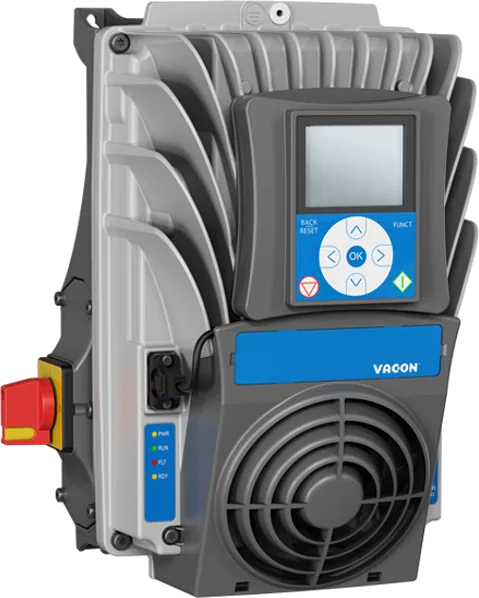
Danfoss offers the Solar Pump application (with the MPPT4 algorithm) for these VACON® drives, with a free license:
- VACON® 100 X: outdoor, IP66 / Type 4X enclosure, no cabinet, mounted on or near the motor. 1.1 to 15 kW at 3×208–240 V and 1.1 to 37 kW at 3×380–500 V. It accepts panels up to 800 VDC.
- VACON® 100 INDUSTRIAL: for panel mounting and higher power.
- VACON® 20 X: the compact outdoor version. Danfoss has it in the limited phase of its lifecycle, so availability should be confirmed.
A common mistake: the VACON® 100 FLOW, despite being Danfoss’s drive for pumps and fans, does not support the Solar Pump application.
What the Solar Pump application protects
Besides MPPT, the application includes functions designed to run unattended:
- Dry-running and underload protection, from motor torque (sensorless) or with a flow meter.
- Minimum and maximum tank or well levels through digital inputs, and sleep mode.
- Two-zone PID, clock and timers, automatic reset after a fault and pre-heating against condensation.
Two reference cases
These are Danfoss projects, not Beiton’s:
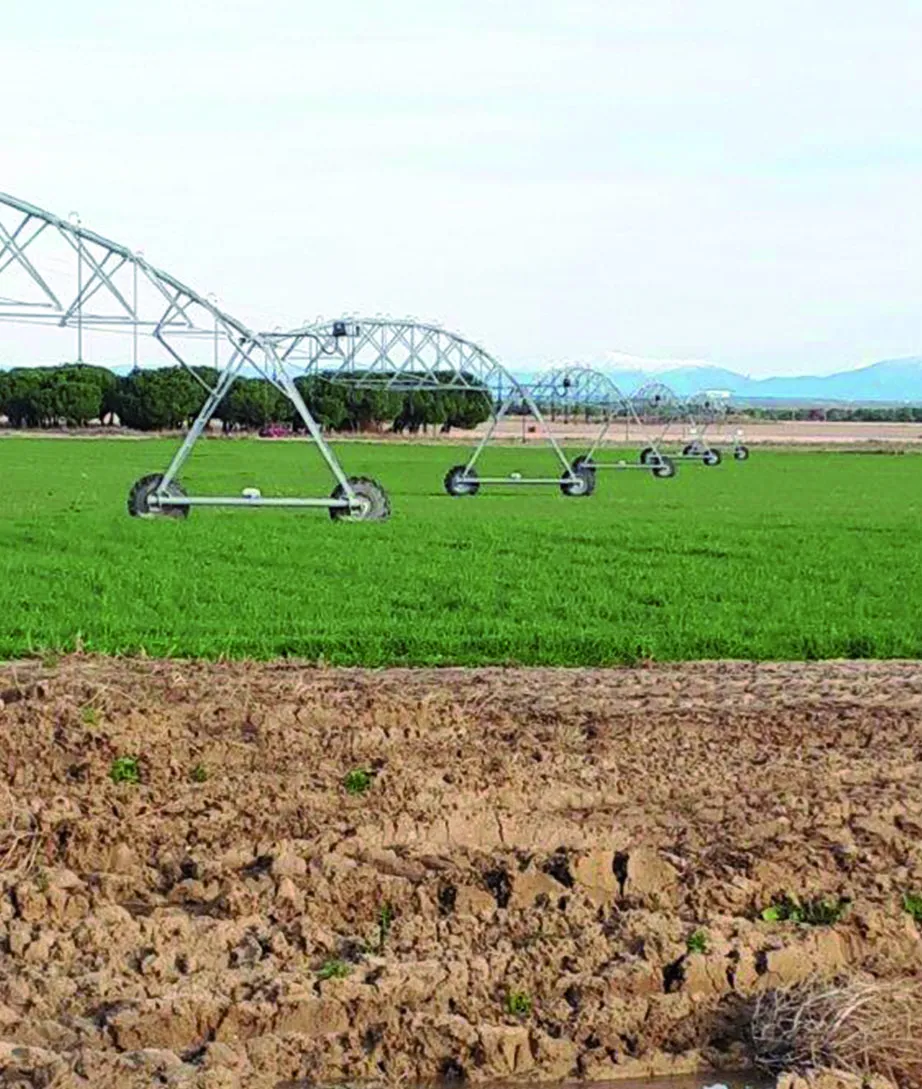
- Sumsol, Spain. 150 ha of sugar beet and corn irrigated by six pumps that fill a 49,000 m³ pond. 944 modules of 320 Wp (300 kWp) power five VACON® 100 INDUSTRIAL drives. With MPPT4, Danfoss reports 35% higher yield; the project no longer draws 478 MWh a year from the grid, with a payback estimated at 8 years.
- Kitui, Kenya. A reverse-osmosis desalination plant runs 100% on solar power, with no grid and no batteries, using five VACON® 100 X drives: 1,200 L/h of drinking water.
The data to size your system
To propose the drive and the PV array, six figures are needed:
- The flow you need.
- Total dynamic head.
- Well depth, and the water level if you know it.
- The pump’s motor power, if you already have one.
- Pumping hours per day.
- Site location.
If you already have a pump, also send photos of the motor and pump nameplates: if the three-phase motor is in good condition, we assess whether it can be reused with the solar drive. If a new surface pump is needed, the portfolio includes Gorman-Rupp.
What Beiton brings
Beiton sizes the drive and the PV array together with the pump, builds the panel with the DC protections and the string box, commissions it and provides DrivePro service, as the only Danfoss DrivePro partner in Panama.
See the solar pumping page, with the VACON® 100 X video, or write to us with your project details.