

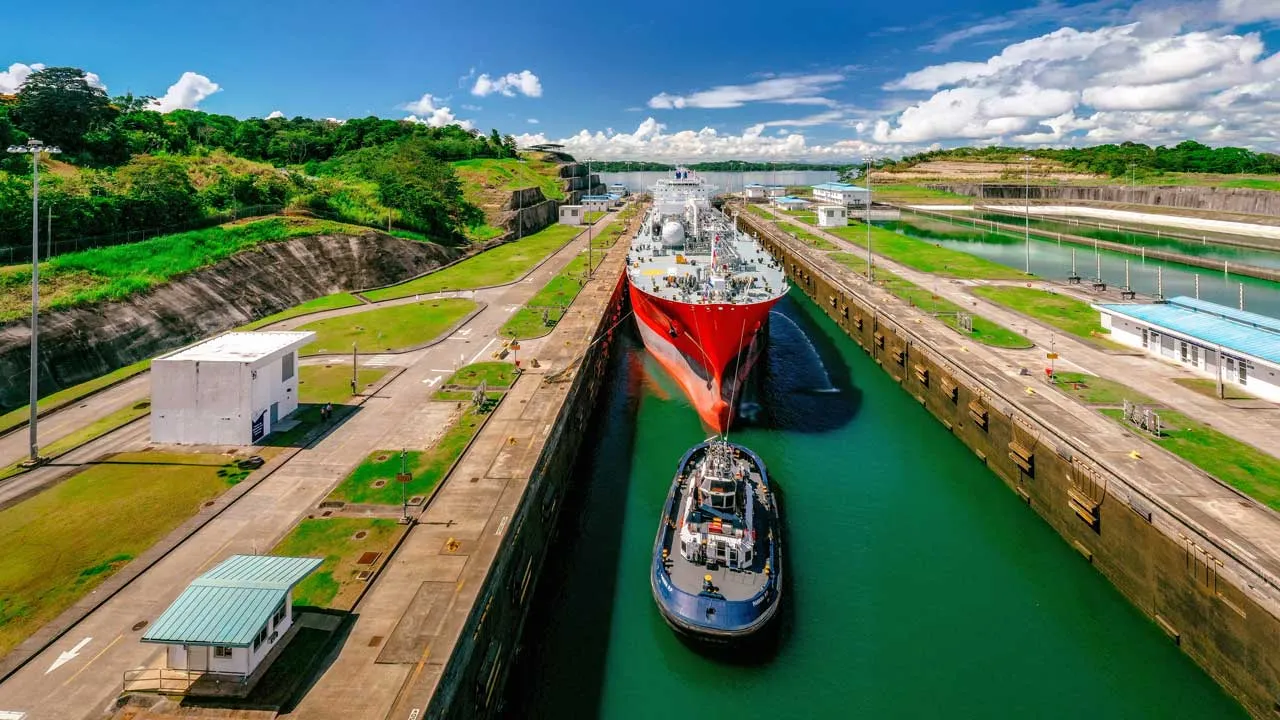
Ships from all over the world transit the Canal, and many of them run variable frequency drives on propulsion, bow thrusters or pumps. When one of those units fails with the ship in Panama, the questions are always the same: does the replacement carry class approval? Who can go on board? Can it be replaced with another brand without losing class? This article answers them.
Where drives sit on board
On a modern ship the drive controls almost everything that turns:
- Electric propulsion. Liquid-cooled modules such as iC7-Marine or VACON® NXP Liquid Cooled, in AFE, inverter and brake chopper configurations.
- Bow thrusters. Speed control for manoeuvring in port.
- Winches and deck machinery. Depending on the power rating, iC7-Marine or VLT® AutomationDrive FC 302.
- Seawater pumps and steering gear. The FC 302 also comes in 690 V versions, common on board.
- Ventilation for engine rooms and holds.
- On-board power. Shaft generator, batteries and hybrid systems, with grid converters such as the VACON® NXP Grid Converter or iC7-Hybrid.
Class approval is per unit, not per brand
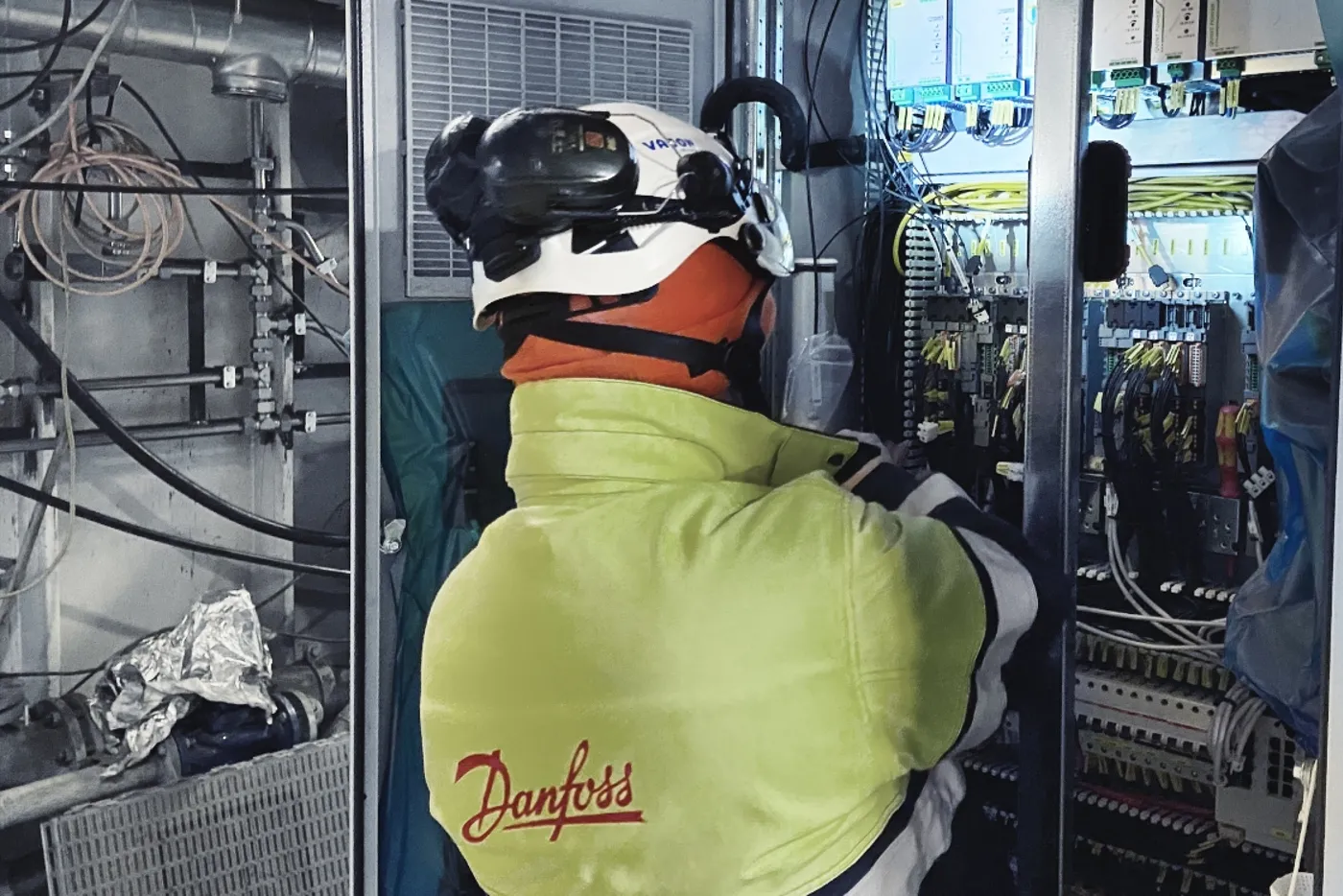
The ship’s classification society (DNV, ABS, Lloyd’s Register, Bureau Veritas and others) requires on-board equipment to carry its type approval. Danfoss states approvals from nine societies for its marine portfolio: DNV, ABS, BV, KR, CCS, RINA, LR, RMRS and ClassNK.
What that does not mean is that every Danfoss drive holds all of those approvals. Approval depends on the product, the version and the application. So before proposing a unit, the right steps are:
- Confirm which society classes the ship.
- Check the certificate for that specific unit in that application.
- Hand over the certificate together with the proposal.
If the change is a retrofit (another brand’s drive replaced with a Danfoss one), the society usually also has to accept the modification. The supplier should provide the technical documentation for that process.
Shore power: the 50 vs 60 Hz problem
With shore power (cold ironing), the ship shuts down its generators at berth and draws power from the port. Panama’s grid runs at 60 Hz; a ship with a 50 Hz grid cannot connect directly.
The answer is a frequency converter between the port grid and the ship. Danfoss has applied it with iC7-Hybrid to supply cruise ships in Nordic ports, with 16 to 32 MVA systems. Each project is sized for the ship’s load and the grid available in the port. If batteries are involved too, the project looks like a battery energy storage system (BESS).
If the drive fails with the ship in Panama
The practical rule: nobody boards during the Canal transit. The work is done with the ship at anchor or at berth, in Balboa on the Pacific or in Cristóbal and Manzanillo on the Atlantic, and access is coordinated through the shipping agent.
To save time, send from the very first message:
- Vessel name, flag or classification society.
- ETA or position.
- Drive model and fault code.
- A photo of the nameplate and another of the display.
With that, it is decided whether the job needs a repair, a spare part, a DrivePro Exchange (a new unit for a current Danfoss drive) or a Retrofit (when the unit is obsolete or from another brand). A retrofit is best planned for a scheduled stop or a shipyard visit, not for a port call of a few hours.
Reference cases
Two Danfoss projects show how far this equipment goes (they are the manufacturer’s cases, not Beiton’s):
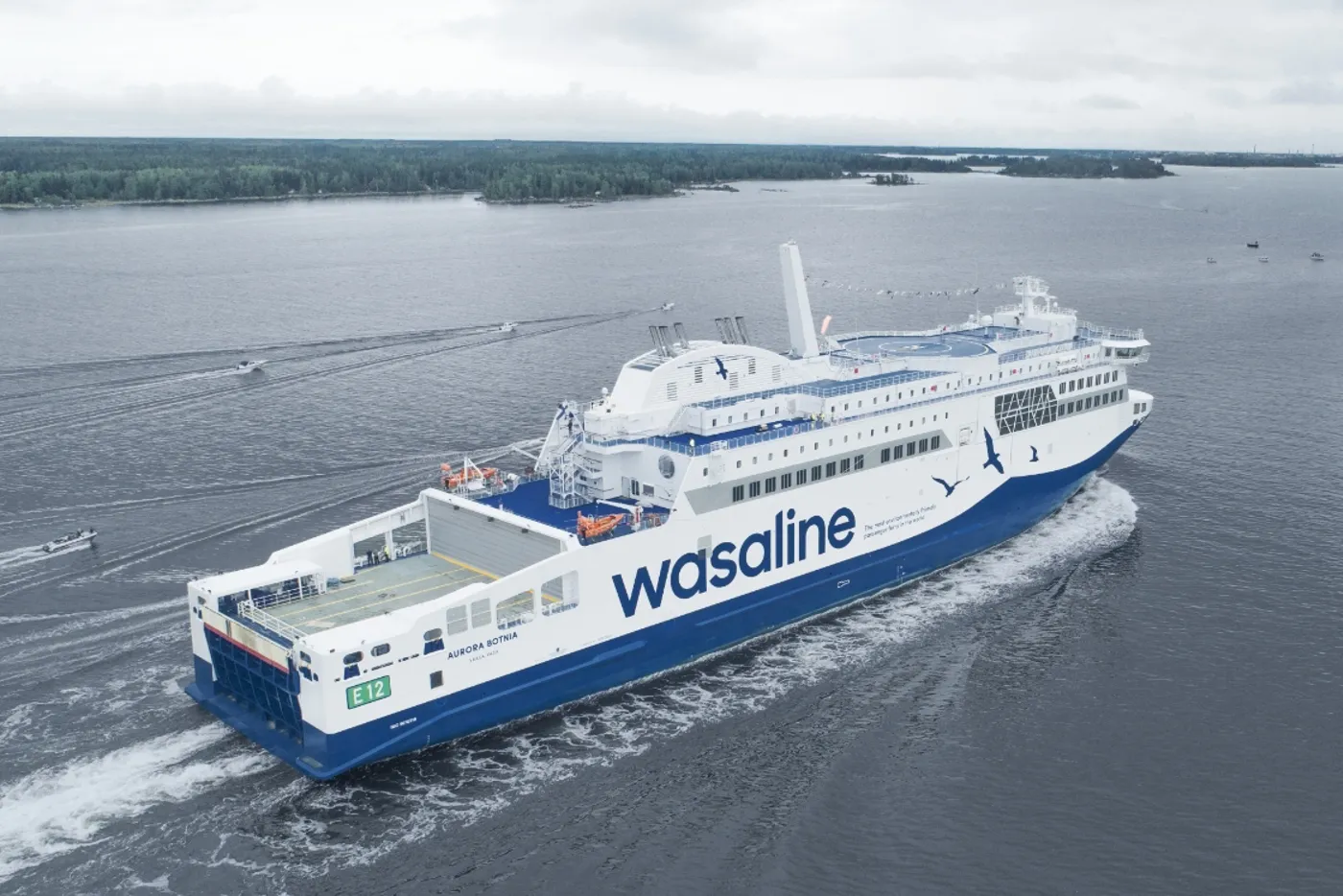
- Aurora Botnia ferry (Vaasa–Umeå): iC7-Marine on propulsion (2 × 6 MW) and bow thrusters (2 × 1.5 MW), and iC7-Hybrid for 2.2 MWh of batteries. It enters port on battery power and recharges from shore at berth.
- MAGDALEN dredger: three VACON® 3000 medium-voltage drives for 1.6 and 3.2 MW dredge pumps. For loads that size, see medium-voltage drives.
Beiton Marine
Beiton Marine is Beiton Tecnología’s marine division, and Beiton is the only Danfoss DrivePro partner in Panama. We handle 24/7 emergencies over WhatsApp (+507 6379 3478), on board or in port, and plan retrofits with the documentation for class.
See equipment, applications and FAQs on the Beiton Marine page, or write to us with your vessel’s details.