

Conversations about energy storage usually start and end with the batteries: chemistry, kWh, price per kWh. But a BESS (battery energy storage system) has three parts, and the one that decides what the system can do is not the batteries: it is the converter.
The three parts of a BESS
- The batteries store the energy, as direct current.
- The converter connects those batteries to the grid, the plant or the ship, turning direct current into alternating current (and back, to charge them).
- The control decides when to charge, when to discharge and how much.
Two BESS with the same batteries can do very different things depending on the converter and how it is set up: one only shaves peak demand; another can also bring the plant back after a blackout.
What a BESS is for in a plant
- Backup and continuity. Industrial and commercial plants that cannot stop during an outage or a grid disturbance. The converter also helps hold up power quality.
- Peak shaving. The batteries supply energy during the hours of highest consumption to lower the peak the plant draws from the grid.
- Stored solar energy. Keeping what a PV plant produces to use it when there is no sun, instead of wasting it.
- Microgrids and weak-grid sites. The converter creates the AC grid on its own or works in parallel with generators.
- Ports and hybrid ships. Shore power and batteries on board; we cover them at Beiton Marine.
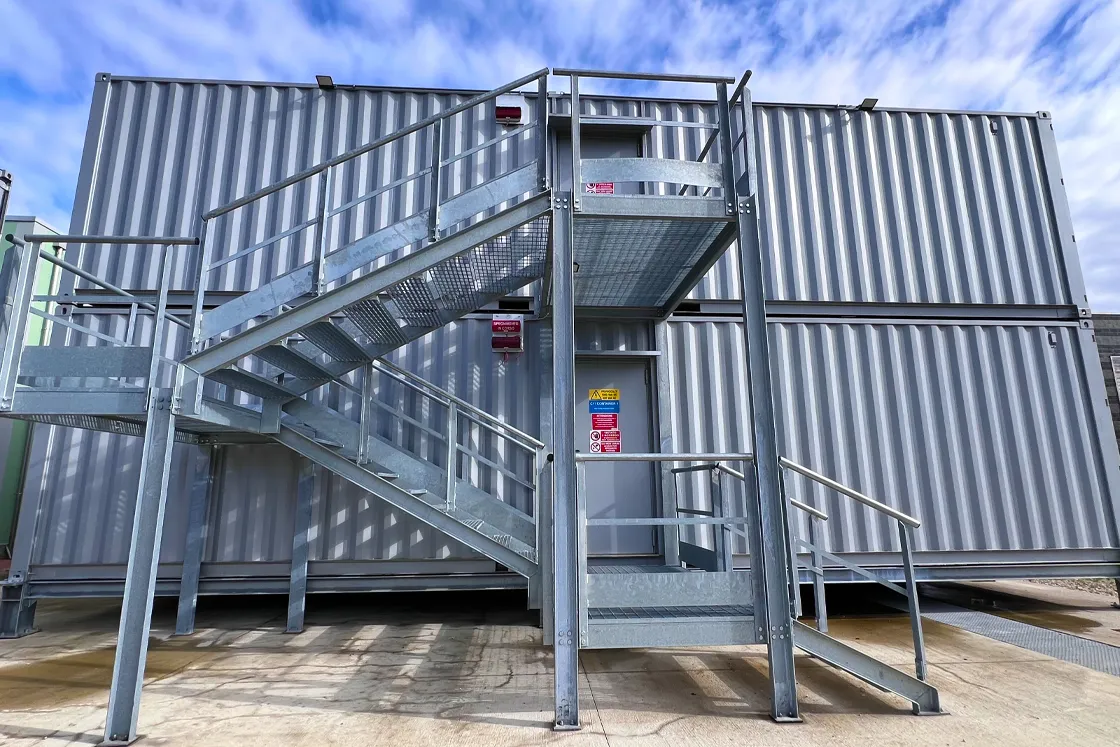
Following the grid or forming it
This is the difference that matters most when choosing the converter:
- Grid-following. The converter synchronizes with the utility grid and charges or discharges the batteries following its voltage and frequency. If the grid goes down, the converter has nothing to follow.
- Grid-forming. The converter sets voltage and frequency instead of following them: it can create an AC grid on its own. That allows island mode, operation in parallel with other generators using droop control, and black start: bringing the grid up from zero after a blackout.
If the goal is only peak shaving, a grid-following converter may be enough. If the goal is real backup during outages or a microgrid, you need grid-forming. Danfoss brings both functions together in the iC7-Hybrid platform.
What the iC7-Hybrid offers
According to Danfoss:
- Liquid-cooled modules from 0.25 to 9 MVA and beyond (170–7370 A), at 3×380–500 VAC and 3×525–690 VAC, with an installation footprint up to 50% smaller than alternative modules.
- A 1500 V DC version with silicon carbide (SiC) and 99.2% efficiency, with built-in grid-forming, on-grid or off-grid.
- The outdoor String PCS (IP65): it charges and discharges each battery string separately, even mixing new and second-life batteries. One string does not hold the others back.
- DC/DC converter, AFE and generator control on the same platform, with cybersecurity to IEC 62443-4-2 (SL-C 2).
The proven alternative is the VACON® NXP Grid Converter, which is the one Danfoss used in the two cases below.
Two reference cases
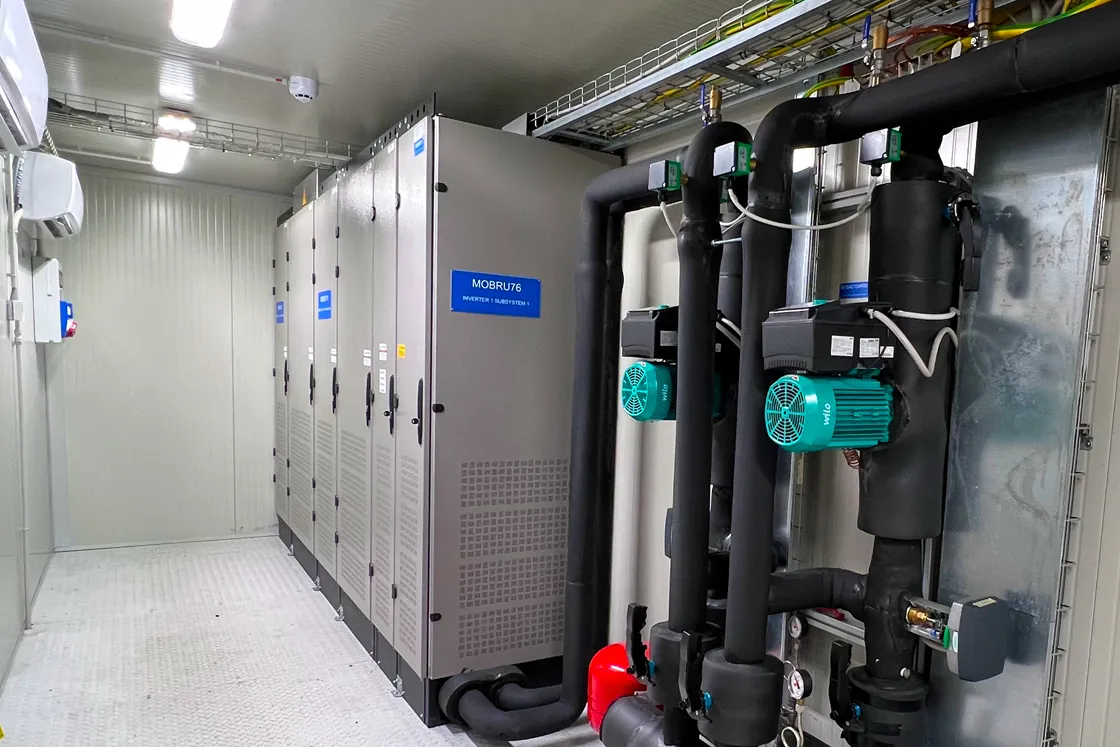
These are Danfoss projects, not Beiton’s, but they show what the converter does:
- Fast frequency reserve in Italy. A 12.6 MW / 7 MWh BESS, part of a Terna pilot, with 12 liquid-cooled VACON® NXP Grid Converters. It swings from −12.6 MW to +12.6 MW in under 160 ms (the requirement was under 200 ms), with 98% converter efficiency.
- SmartGrid containers in the Netherlands. 250 kVA/500 kWh and 500 kVA/1000 kWh containers, each with a VACON® NXP Grid Converter. At a fair in Hengelo, three containers replaced the diesel generators for four days.
What to prepare before asking for a proposal
Four figures are enough to propose a configuration:
- Power the system must deliver (kW).
- Energy it must store (kWh).
- Voltage of the grid or the plant.
- Main goal: backup during outages, peak shaving, solar energy or a microgrid.
If you also have the single-line diagram or a consumption measurement, the proposal comes faster. If what you want is to store solar energy to pump water at night, see solar pumping too: storing water instead of energy is often enough.
What Beiton brings
Beiton does not sell batteries. We integrate the Danfoss converter with the battery system your project defines: application engineering, panels and PLC/SCADA control, coordination of the grid connection with the utility, commissioning and DrivePro service, as the only Danfoss DrivePro partner in Panama.
See the battery energy storage (BESS) page or write to us with your project details.